Boating basics
Getting Around Amsterdam by Boat: Routes, Water and Where to Moor
The canal ring is a network, not a single loop. Knowing which water goes where turns a nervous first trip into an easy afternoon.
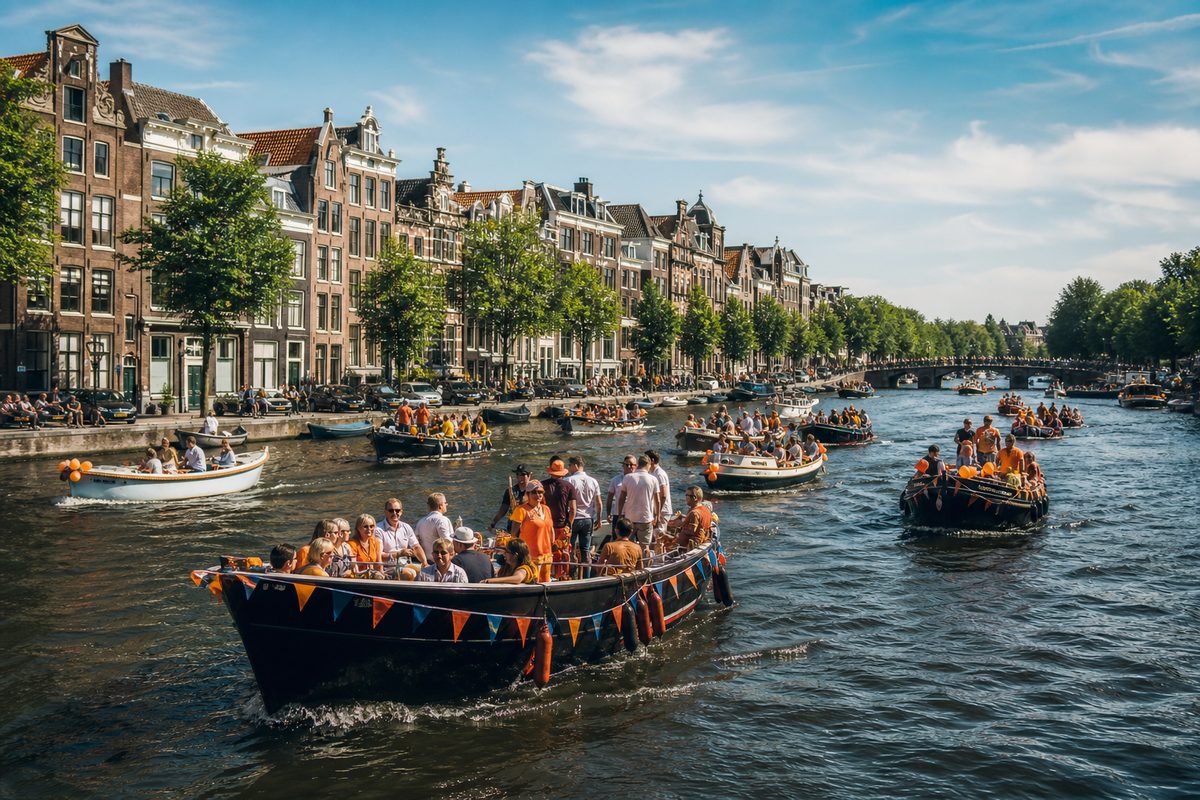
Amsterdam's water comes in layers. The famous canal ring, the Grachtengordel, is a horseshoe of four main canals wrapping the old centre; the Amstel river feeds into it from the south; and the broad IJ runs along the north edge, connecting to the harbour and the wider waterways toward Haarlem.
For a first trip, the inner canal ring is the easy, sheltered choice. The IJ and the open water beyond are busier and rougher and are best left until you are comfortable, that is where events like the Cruise and Dance and the HISWA te Water boat show take place.
The canal ring, the Amstel and the IJ
Sticking to the Grachtengordel keeps you among the prettiest stretches and the least traffic. The Amstel is wider and links the ring to the south; the IJ is a working waterway with ferries and big ships, so treat it with respect. The free NDSM ferry from behind Central Station crosses the IJ for foot passengers, which is how most people reach the boat show without their own boat.
Where to moor
Moor only in permitted spots and never block a bridge, a junction or another boat's exit. Popular central stretches fill up fast in summer; a quieter side-canal is often a better bet. On event days the good spots go hours early, see boating rules and etiquette for how to tie up considerately when boats raft together.
Reaching the events by water
Most of the canal events are on or beside the water, so arriving by boat is often the best way in. If you do not have your own, the guide to renting a boat covers the licence-free electric boats that anyone can steer. Plan the route out as well as in: getting a boat home across the waterways after a busy event takes longer than you expect.
Reading the water and the bridges
Low bridges are the thing first-timers underestimate. Many canal bridges sit low over the water, so a tall boat, a raised canopy or standing passengers can be a problem; when in doubt, slow right down and look before you commit. Currents are gentle inside the ring but stronger on the Amstel and the IJ, where wind and passing ships also push you around. Keep a hand free for fending off, watch for cyclists and pedestrians at low bridges who may not see you, and give yourself far more room to stop than a car would need, boats have no brakes.
A simple half-day route to try
If you are unsure where to point the boat, a gentle loop of the inner ring makes an ideal first trip. Starting near the centre, follow one of the main canals, the Prinsengracht is the widest and most forgiving, and simply keep the ring on one side, letting it curve you around the old town. The four concentric canals connect at regular cross-canals, so you can cut between them whenever you like and never stray far from where you began.
Build in a stop or two: a quiet side-canal to drift for a while, or a cafe with a mooring where you can tie up for a coffee. Keep an eye out for the low bridges, slow right down before each one, and watch for cyclists and pedestrians who may not see you. A half-day at this pace covers the prettiest stretches of the Grachtengordel without ever feeling rushed, and it leaves you confident enough to try the Amstel or the busier eastern water another time. When one of the canal events is on, the same loop doubles as the approach, moor early on the event stretch and you have both a trip and a grandstand. If a few trips turn into a plan to own a boat, the tips on buying a boat in Amsterdam are a sensible next read; and in winter the water has its own draw, when the Amsterdam Light Festival turns the canals into a trail of light art seen from a boat.
The rise of the electric boat
Much of what makes boating in central Amsterdam so pleasant now comes down to the electric boat. The city has steadily pushed its inner canals toward quiet, emission-free craft, and the small self-drive electric boats that dominate the rental docks are the result: near-silent, easy to handle and needing no licence. For anyone on the water that shift is a gift, the canals are calmer and cleaner than in the days of petrol outboards, and the quiet lets the city come through, the lap of the water, the bells, the sound of a concert carrying from a bridge. It is worth choosing an electric boat not only because it is increasingly the rule in the centre but because it simply makes for a better trip.
The practical upshot is that a first-timer can step aboard with very little anxiety. There is no gear to crash and no engine to flood, and the gentle top speed means mistakes happen slowly enough to correct. That ease is a big part of why so many visitors end up on the water here: the barrier to a first trip is low, and the reward, seeing the city from its canals rather than its streets, is high.
When to go
Timing shapes a trip as much as the route. The water is busiest on warm weekends and afternoons and on the big event days, when the central canals can feel congested; mornings, weekdays and the shoulders of the season are far quieter and easier for a relaxed paddle or a first outing. Spring and early autumn offer mild days and thin crowds, high summer brings the events and the buzz, and even winter has its appeal for the well-wrapped, with the Amsterdam Light Festival drawing boats out after dark. If you want the canals at their calmest, aim for a weekday morning; if you want the buzz, the summer afternoons deliver it, at the cost of sharing the water with everyone who had the same idea.
The light matters as much as the crowds. Long summer evenings are made for a slow trip as the sun drops behind the gables, while a crisp, bright winter afternoon gives sharp reflections and empty water. Whatever the season, allow more time than the map suggests: low bridges, moored boats and the simple pleasure of drifting all slow a trip down, and the best outings are the ones with no fixed schedule to keep.
Where a trip can take you
A boat turns the city into a network of destinations rather than a single loop. Beyond the central ring, the wide Amstel leads south past classic waterside spots, the eastern canals thread the old harbour islands, and across the IJ the north bank opens up around the NDSM wharf. Many of the best waterside cafes and bars are reachable, or at least glimpsable, from the water, so a trip can be built around a drink on a terrace as easily as around a stretch of canal. And on the right dates, the same routes double as the approach to the canal events: moor early on an event stretch and the trip becomes a grandstand.
None of it needs to be ambitious. Some of the most memorable trips are the least planned, an hour drifting a quiet side-canal, a stop for a coffee where a mooring happens to be free, a slow return as the lights come on. The point of getting around Amsterdam by boat is not to cover ground but to change your relationship with the city, from a place you move through to one you move on, and even a short loop delivers that.
Confidence comes quickly
If there is one thing that stops people getting onto the water, it is nerves, and they are almost always misplaced. The licence-free electric boats are built to be forgiving: slow, simple and stable, with a dock briefing that covers everything you need before you cast off. Within half an hour most first-timers are steering happily, reading the traffic and enjoying themselves, and the occasional bumped fender is part of the learning rather than a disaster. Start on the calmer water, take it slowly, and the canals quickly go from intimidating to irresistible. Getting around Amsterdam by boat is one of those things that looks far harder from the bank than it ever turns out to be from the tiller, and most people who try it once are surprised how soon they want to do it again.
Is the canal ring one loop?
No. It is four main canals in a horseshoe plus connecting waters, the Amstel to the south and the IJ to the north.
How do I reach the boat show at NDSM?
Take the free ferry from behind Amsterdam Central Station across the IJ to the NDSM wharf.
Where can I moor?
Only in permitted spots, never blocking bridges or other boats. Central stretches fill fast in summer.
Is it safe for a first-timer?
The sheltered inner canal ring is fine for beginners. Leave the busier IJ and open water until you are more confident.