Event tips
Where to Watch the Amsterdam Canal Parade: the Best Bridges and Quays
Hundreds of thousands of people line the water for the Pride boat parade. A little planning is the difference between a great view and the back of someone's head.
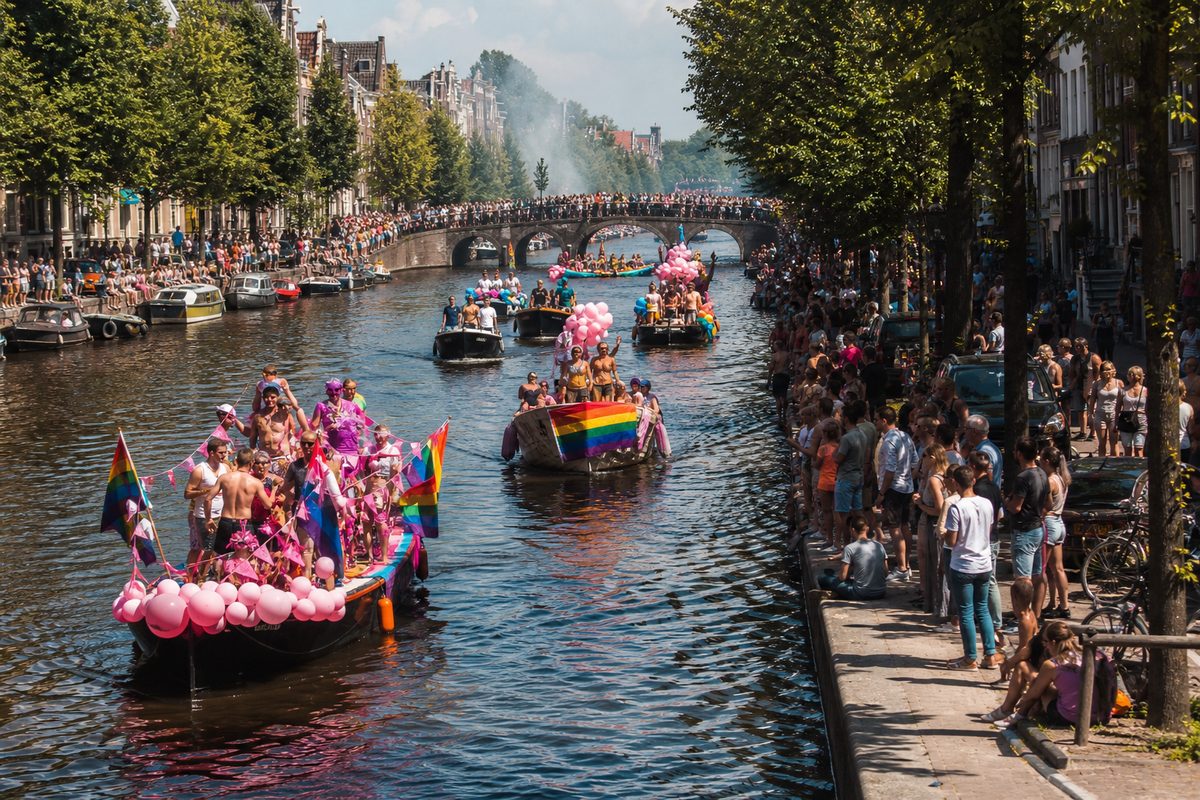
The Amsterdam Canal Parade is the highlight of Pride and one of the largest free events in the country. The boats move at walking pace along a set route, so where you stand decides your whole afternoon.
The route changes slightly year to year, but the classic viewing stretches stay the same. Organisers publish the exact course each summer; check it, then pick your spot from the options below.
The best bridges and quays
The stretches along the Prinsengracht and the Amstel are the traditional favourites, wide quays, plenty of bridges, and the boats passing close. Bridges give height and a clear line down the canal, but they fill first and get packed. A quieter quay further along the route often beats a jammed bridge in the centre.
If you would rather be on the water yourself, see the guide to renting a boat, though note that spectator boats are held back from the parade lane and the best water spots go early.
When to arrive
Good positions fill up hours before the first boat. Arrive early, bring water and sun cover, early August in Amsterdam can be hot and there is little shade on a bridge. The parade runs for several hours in the afternoon, so even a late arrival usually catches part of it.
Getting there and away
Large parts of the centre close to traffic, so public transport beats driving, and the bridges themselves are crowded crossing points. Plan your exit as well as your arrival: the streets around the route stay busy well into the evening as Pride parties take over.
Making a comfortable afternoon of it
Standing for hours in an August crowd is the real challenge, so plan for comfort as much as for the view. Bring water, sun cover and something to sit on if you pick a quay rather than a bridge. Toilets are scarce and queues long, so use one before you settle in. Food stalls near the route are busy and pricey; a packed lunch saves time and money. If you are with children or anyone who tires easily, choose a spot with an easy exit rather than the densest central bridges, and agree a meeting point in case your group gets separated in the crowd.
Family, accessibility and comfort
A day at the parade is long, hot and crowded, so a little thought makes it far more enjoyable, especially with children or anyone who tires easily. Pick a spot with an easy way out rather than the densest central bridges, where leaving mid-afternoon can mean squeezing through a packed crossing. A quieter quay further along the route often gives children a clearer view at eye level than a bridge where they see only the backs of adults. Bring water, sun cover and snacks, since stalls near the route are busy and pricey, and use a toilet before you settle in because facilities are scarce and queues are long.
For wheelchair users and anyone with limited mobility, the flat quays are generally easier than the stepped, crowded bridges, and arriving early to claim a kerbside position is worth the effort. Agree a clear meeting point with your group in case phones fail in the crush, and note that large parts of the centre close to traffic, so plan your approach and exit on public transport. None of this dampens the day, it simply means you spend it watching the boats rather than managing the crowd.
It is also worth remembering that the parade is only the centrepiece of a much longer day. The boats take hours to pass, the crowds build and thin in waves, and the atmosphere along the water is as much of the experience as any single float. Settle in, treat it as an afternoon rather than a quick look, and you will come away with far more than a photograph of a passing boat.
Watching from a boat
Being on the water for the parade is a different experience from watching from the bank, and it comes with its own rules. The procession itself is a closed, organised line of vetted boats, so a private or rented boat cannot join it; instead the surrounding canals fill with a second, informal flotilla of spectator boats moored along the edges, watching the decorated boats pass. Spectator craft are held back from the parade lane, so you get a place among the watching crowd on the water rather than in the show. If that is what you want, arrive many hours early, expect to raft up tightly with others, and be ready for a long, hot day hemmed in once the parade is under way.
The usual canal courtesies matter more than ever in that crush: keep your wake to nothing, leave room for others, and keep whoever is steering to the alcohol limits even in the party atmosphere. If you are thinking of watching from the water, the guide to renting a boat covers how to get onto it and the guide to boating rules and etiquette covers the conduct; both are worth reading before an event day rather than on it.
The parade as part of Pride
The Canal Parade does not happen in isolation; it is the centrepiece of a longer Pride week that fills the city with events, parties, talks and street celebrations. Planning around that wider programme changes the day: the parade is the loud, crowded high point, but the days around it offer everything from quiet commemorations to open-air parties, and building the parade into a fuller Pride visit gives it context beyond the spectacle. The surrounding squares and streets host big screens and events on parade day itself, so even without a canal-side spot you can be part of the celebration.
It is worth remembering, too, what the parade is for. Beneath the floats and the music it remains a demonstration of visibility and solidarity, and the mix of boats, from campaigning groups to the emergency services and the national institutions, is part of its meaning. Coming to it with that in mind, rather than treating it purely as a photo opportunity, makes for a better and more respectful day.
A responsible, respectful day
A day this size asks a little responsibility of everyone in the crowd. Take your litter with you, be mindful that you are a guest at a celebration that matters deeply to many of the people around you, and give space to those who have come for its meaning as much as its spectacle. Look out for each other in the heat and the crush, keep an eye on children and anyone who might struggle in a dense crowd, and know where the quieter exits and stretches are if you need a break.
Handled that way, the Canal Parade is one of the great days of the Amsterdam summer: joyful, generous and open to all. Come early, come prepared, come in the right spirit, and whether you watch from a bridge, a quay or a boat, it delivers an afternoon unlike anything else on the water.
After the parade
The parade does not so much end as dissolve into the evening. As the last boats pass, the crowds spill off the quays and bridges all at once, so the immediate aftermath is the most crowded and slowest moment of the day for getting anywhere; a wiser plan is often to let the first wave go, find a spot for a drink, and move on once the crush has thinned. The celebration carries on well into the night across the city's squares and venues, so there is no need to rush from the water straight home.
It is worth planning the end of the day before you need to. Agree where you will regroup, know which direction is quietest for leaving, and expect public transport to be busy long after the boats have gone. Handled calmly, the wind-down is just another part of a long, good day rather than a stressful scramble to finish it, and staying out for the evening is often the best way to let the crowds disperse before you travel.
Where is the best place to watch the Canal Parade?
The Prinsengracht and Amstel stretches are the classics. Bridges give the clearest view but crowd first; a quieter quay further along is often better.
How early should I arrive?
Hours ahead for a prime spot. The parade runs for several hours in the afternoon, so latecomers still catch part of it.
Is it free?
Yes. The Canal Parade is free to watch from the quays and bridges.
Can I watch from a boat?
Yes, but spectator boats are kept out of the parade lane and the best water positions fill up early.